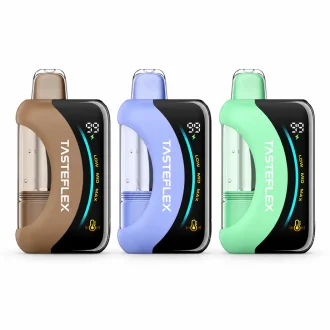
To be honest, there is no single fixed number of chemicals in vapes. You should know that, yeah, vapes contain chemicals, and depending on the type of vape, as well as the e-liquid contained, the chemical composite might be quite high.
The amount of chemicals you inhale while vaping depends on the vape, the e-liquid, the heat level you’re on, the flavoring, and even the way the device material. Even the nicotine, which is the core base element in vapes, is a chemical compound.
So, if we’re going to talk about “how many chemicals are in a vape?” then we have to first buttress the ingredients that go into the liquid, and what chemical byproducts are created when the liquid is heated? There’s quite a lot to discuss here if you look at it from a detailed perspective, and this article would try to cover all.
Do Vapes Really Contain Chemicals?
Don’t panic, but YEAH, vapes contain chemicals, and quite a lot of them. These chemicals are resident in the e-liquids, which are a composition of multiple chemical compounds, commonly nicotine, flavoring, PG, and VG. Every vapable e-liquid is inflammable due to the chemicals contained in them, and this is why you should not expose them to excessive heat or severely high temperatures.
How Many Chemicals Are In Vapes?
While no one can effective name all chemicals that may be contained in a vape, except the manufacturer of the vape, here are the common chemicals known to all:
- Propylene Glycol (PG)
- Vegetable Glycerin (VG)
- Flavors and aroma transporters
- Nicotine
- Preservatives
Now, these are the commonly known ingredients of a typical vapable e-liquid, mostly for disposables and refillable pod vapes. But then, some e-liquids may contain more ingredients in addition to these, for specific reasons relating to the brand.

Also, not to dismiss the fact that the materials used in crafting the vape device itself, and the wick/coil, could contribute chemicals composites like lead, chromium, and nickel when the vape is being used.
Here’s how it happens:
When you power on a vape, the coil/wick heats up the e-liquid to produce the flavorful aerosol you inhale, and this heating, overtime, can break down the materials used for the vape hardware (on the inside), thus causing debris like lead, chromium, and nickels to enter the e-liquid, mix with the existing chemicals the liquid already contained, and then you inhale all of that. Also, volatile organic compounds (VOCs) such as acetaldehyde and acetone can result from the consistent heating of the vape, and all these are chemicals.
Put simply, a vape may contain up to 6 different chemicals, or more, all mixed up inside the e-liquid. So, it’s difficult to mention a particular number since even regular usage of the vape device could introduce more chemicals when the hardware material starts breaking down on the inside.
Why Does the Number of Chemicals Change from One Vape to Another
It’s quite simple: Disposable vapes, pod systems, refillable tanks, and modified devices all use different hardware and different liquid formulations. Different brands, different materials, and e-liquid formula choices, and so, that’s it.
Practically, there are no two vapes that are exactly the same in terms of chemical count, even if they’re from the same manufacturer. Also, we have to factor in that when e-liquids get heated up, their chemical composites can break down, and that could introduce more chemicals into the mix.
What About “Zero Nicotine” Vapes?
I know because they are called “zero nicotine” vapes, you’re assuming they are chemical-free, right? Well, nicotine is only but one out of the many chemicals contained in a vape e-liquid. So, even when it’s not included in an e-liquid, there are other chemicals inside the e-liquid, such as flavoring, aroma transporters, PG, and VG, so yeah, even zero-nicotine vapes contain chemicals.
The thing is, you shouldn’t really be skeptical about these “chemicals in vape” stuff, because if you look into it carefully, there are many other things we consume that contain some of these chemicals too, from canned foods to processed cereals, noodles, and many others. It’s all about moderation, honestly—keeping yourself from consuming these chemicals more than your body can handle, ‘cos yeah, the human body can trash out some of these chemicals once they get in.
Demystifying the Common Chemicals Found in Vapes
- Nicotine: This is the core, stimulating chemical included in vapes. It is also highly addictive, which is why vaping can be very addictive.
- Propylene Glycol (PG) and Vegetable Glycerin (VG): These are common base solvents in e-liquids. VG, particularly, makes the e-liquid thicker, while PG aids in flavor density and fidelity.
- Flavoring Chemicals: Mostly available in disposables, these are used to define the taste profiles of e-liquids.
- Carbonyl Compounds: Examples are formaldehyde, acetaldehyde, and acrolein. These typically result from heating the e-liquids. So, they are not actually added to the vape or e-liquid during the manufacturing process; they form from the breakdown of the heating hardware, wick or coil, and the tank’s finish material.
Vapes vs. Cigars: Which Has More Chemicals?
CDC reports hint that e-cigarettes (vapes) generally contain fewer harmful chemicals compared with a mix of up to 7,000 chemicals associated with cigarette smoke. Cigars are proven to produce very high concentrations of carcinogens from tobacco combustion, and up to 70 of these carcinogens in cigars are linked with cancer and lung diseases.
Of course, you already know, this does not mean that vapes are innocent here; they just contain much fewer chemicals than cigars. However, on the flip side, I hope you know that vaping delivers much more nicotine into your system than cigars? Yeah, one vape contains as much nicotine as 20 cigarettes.
How to Reduce Your Chemical Exposure While Vaping
Since you now know what chemicals are potentially floating around in your vape, here’s the practical side: how do you minimize your exposure to them?

Please note: These are not proven or guaranteed, but they could help.
- Replace your coils regularly: This is probably the most important one here. Old, worn-out coils are far more likely to break down and leach metals into your e-liquid. A fresh coil keeps the chemical contamination low. But you know, you can only replace coils on vape kits, not disposables.
- Avoid dry hits: You can’t always determine when this happens, but as much as you can, try to avoid dry hits. A dry hit happens when you fire your vape without enough e-liquid on the wick; that is, when you try to hit the vape while the wick is not fully saturated. This usually occurs after you have just replaced your old wick, or at the first draw (for disposables).
- Don’t vape at excessively high wattages: I know you want to knock yourself out and drive your vape to its fullest potential, but trust me, you gotta minimize that adrenaline. Higher temperatures mean more thermal breakdown of e-liquid components, which leads to more carbonyl compounds like formaldehyde and acrolein getting into the e-liquid
- Choose e-liquids from reputable brands: This can’t be overemphasized. I mean, even e-liquids from reputable brands contained these chemicals we’re discussing, but yeah, it’s safer to go with those reputable brands than generic brands.
- Keep your device clean: If you use a vape kit, keep the tank and pod clean. Dirty tanks, which results from constant usage and refills, can introduce degraded chemical compounds back into your vape.
- Vape in moderation: This ties back to what was mentioned earlier. Your body can handle and flush out small amounts of these chemicals over time. The problem comes when you’re vaping heavily and continuously, giving your system more than it can effectively process.
Conclusion
So, how many chemicals are in vapes? There’s no single, universal number, and honestly, that’s the most truthful answer anyone can give you. Every vape has a unique chemical count; it depends on the e-liquid formula, the vape device, the materials used in its construction, the temperature it’s operated at, and how long the device has been in use.
What we do know is that the core chemicals in vapes are nicotine, PG, VG, flavorings, and potential byproducts from heating, and these are present in virtually every vape on the market. Learning that vapes’ got chemicals isn’t about being paranoid; it’s about being a smarter, more responsible vaper.
In summary, take care of your vape device, choose your e-liquids wisely, and vape in moderation, and you’ll be in a much better position to enjoy the experience without unnecessary worry.
Finally, if you’re looking for high-quality vapes and e-liquids you can trust? Browse our store for a carefully curated range of devices and flavors built for a cleaner, better vaping experience.